
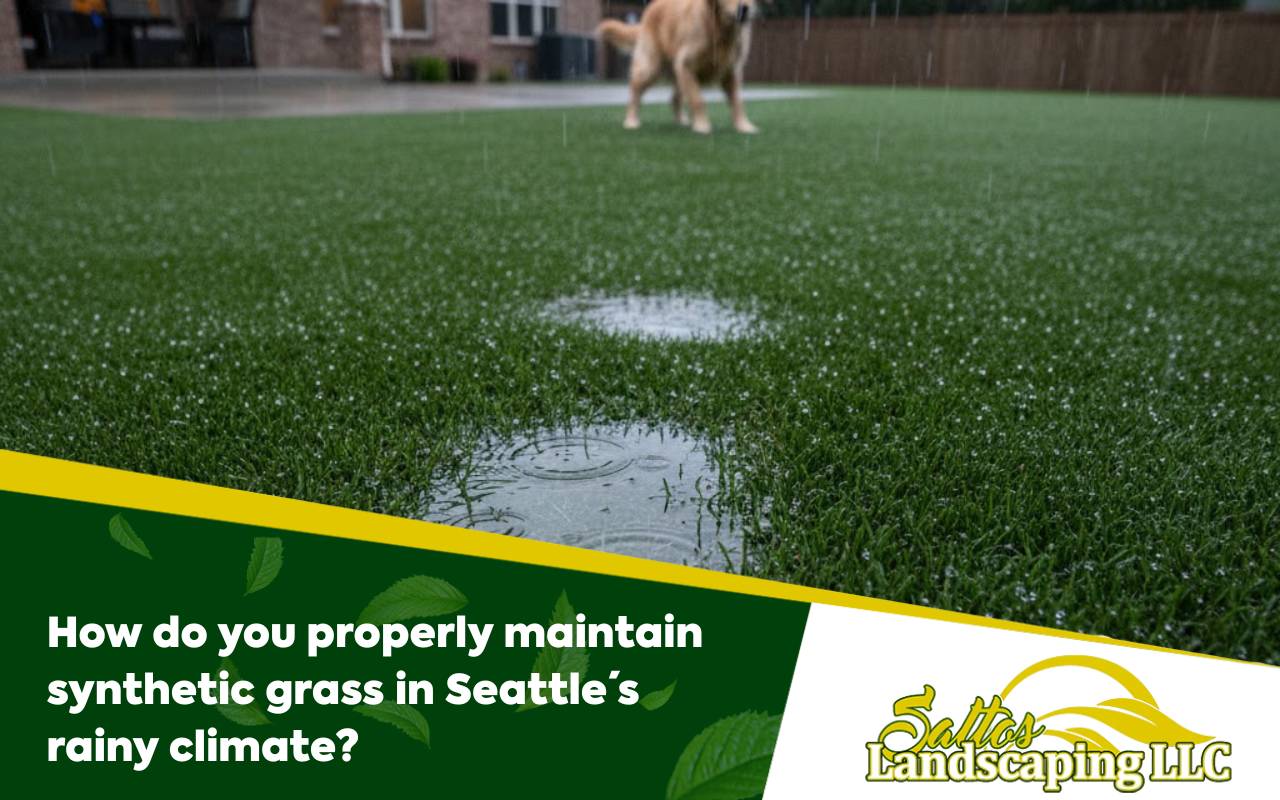
Seattle’s persistent rainfall can make maintaining artificial turf more challenging than it seems. These essential synthetic grass maintenance tips in rainy climates in Seattle will help you prevent mold, enhance drainage, and extend your turf’s lifespan. Discover how to keep your lawn lush, pet-friendly, and resilient through every downpour.
How do you properly maintain synthetic grass in Seattle’s rainy climate?
Maintaining synthetic grass in Seattle’s rainy climate requires consistent care to prevent drainage issues, mold, and fiber wear. The key is proactive maintenance—choosing the right materials, cleaning regularly, and managing water flow. With these practical synthetic grass maintenance tips in rainy climates in Seattle, you can ensure a long-lasting, lush, and low-maintenance lawn that thrives despite constant rainfall.
Understanding how Seattle’s wet weather affects artificial turf
Seattle averages a high number of rainy days each year, saturating turf systems and placing greater demands on drainage. According to a landscaping magazine’s feature on artificial turf durability, “heavy rains can saturate the turf, leading to water-logging and the potential for mold and mildew if drainage systems are inadequate.” Vents Magazine. Recognising these effects early allows you to take targeted action and keep your lawn fresh and functional.
Choosing durable turf and integrating proper drainage solutions
When facing a rainy climate, choosing the right materials is your first defence. Opt for turf with strong backing, high-drainage capacity, and moisture resilience. A landscaping industry article emphasises that “rainfall patterns and humidity must be addressed by selecting turf systems engineered for effective drainage.” Synthetic Grass Gold Coast. Combining quality turf with proper installation (e.g., crushed rock base, slight grade, drainage layers) will support longevity and performance in Seattle’s frequent rain.
Preventing mold, mildew and algae growth in damp conditions
Wet climates may promote unwanted growth if turf is left unmanaged. To aid in mold prevention in turf and algae control in artificial grass:
- Regularly remove leaves, twigs and other organic debris so moisture can dissipate. Shaw Grass News Blog.
- Clear any standing water promptly—pooling water is a risk area for mold or moss. Live To Plant.
- Maintain good edge clearance and trim overhanging vegetation so shade and moisture don’t linger.
These practices maintain surface hygiene and reduce the buildup of moisture-trapping material.
Regular maintenance practices tailored for rainy weather
Establishing a routine is key in a rainy climate. Weekly checks for standing water or debris build-up are recommended, along with brushing the fibers and rinsing after wet periods. Shaw Grass News Blog. These tasks align perfectly with your wet weather care guide mindset and help you apply synthetic grass maintenance tips in rainy climates in Seattle effectively.
How-to: Maintain synthetic grass during Seattle’s rainy season
- Weekly: Inspect your turf for areas of pooling or soggy patches; clear any visible debris or leaves.
- After major rain: Use a soft-bristle broom or leaf blower to remove fallen material and restore vertical fiber position.
- Monthly: Rinse the turf with a hose to flush grit or sediment; particularly important in damp conditions.
- Twice a year: Check shaded or low-traffic zones (especially where moisture lingers) and treat if mold, algae or moss appear.
- Annually: Review infill distribution, ensure drainage pathways are clear, and top up with proper turf infill options if needed.
Frequently Asked Questions
1. How often should I brush artificial grass in Seattle’s wet climate?
Brush at least once a month, and more frequently after heavy storms or persistent drizzle, to help restore upright blades and prevent matting. Shaw Grass News Blog.
2. What drainage system works best for synthetic turf in rainy climates?
A base of crushed rock or gravel with a slight slope (≈1–2 %) and a permeable turf backing or drainage layer are ideal to avoid pooling and soggy spots. Synthetic Grass Gold Coast.
3. Are there pet-friendly methods to clean synthetic turf that’s often wet?
Yes. Use enzyme-based cleaners for pet urine, rinse the area regularly, and ensure proper drainage to avoid odors or bacteria build-up in moist areas.
4. Which infill types are best for wet climates like Seattle?
Infill that aids drainage—such as coarse silica sand or rubber crumb that doesn’t compact easily—works best. Proper infill supports both comfort and drainage performance.
5. Will my artificial grass promote mold or mildew if it rains a lot?
Not necessarily. With proper drainage, routine debris removal and occasional rinsing, modern turf resists mold and mildew growth. But lack of airflow plus organic debris will increase risk. Shaw Grass News Blog.
Long-lasting turf solutions for Seattle’s rainy days
Investing in quality materials and correct installation means fewer worries when the rain keeps falling. Look for UV-stable fibers, antimicrobial infills and backings rated for wet environments. As noted in the Vents Magazine article, “by selecting high-quality turf and following proper care practices, you can enjoy a lush and vibrant lawn that withstands the test of time.” With the right system and care, your lawn will deliver low-maintenance appeal, even when Seattle’s skies stay grey.