
Dealing with standing water in your lawn after rain can be stressful, especially in a rainy city like Renton, WA. Persistent puddles, muddy paths, and spots around your home are more than an eyesore; they can damage plants, attract pests, and threaten foundations. This guide explains practical drainage fixes homeowners can use to protect their yards from future water damage.
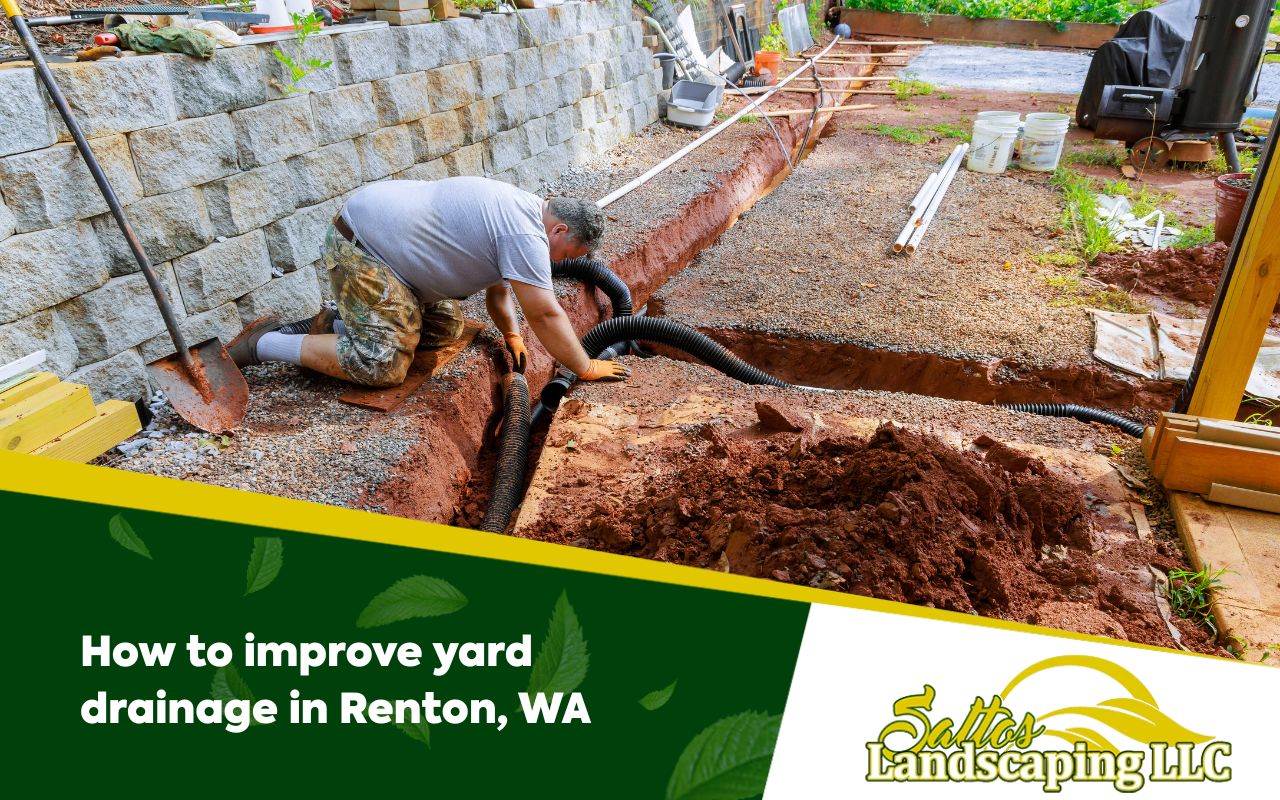
How to improve yard drainage in Renton, WA
The most reliable way to improve Yard Drainage in Renton, WA is to combine grading, French drains or dry wells, and smart plant choices based on your soil. By redirecting water away from your house and giving it safe places to soak in, you eliminate puddles and protect both your lawn and foundation.
Understanding yard drainage issues in Renton, WA
Renton’s frequent rain and clay-rich soils mean water can sit on the surface for days. That’s why many homeowners see stubborn puddles after rain Renton in the same spots every storm. Too much moisture makes lawns unusable, encourages moss, and can even affect structures if water collects near foundations or patios.
Common signs that drainage is failing include:
- Water pooling for more than a day after storms.
- Spongy or muddy turf that never fully dries.
- Moss, weeds, or fungus thriving where grass struggles.
- Soil erosion along paths, patios, or fences.
- Water stains, mildew, or damp smells near the house.
By understanding where and how water moves across your property, you can choose stormwater runoff solutions that solve the real cause instead of just treating symptoms.
Why proper drainage matters for your lawn
Good drainage protects both your landscape and your home. When water flows away from the house and off the lawn correctly, grass roots get the oxygen they need and soil stays stable. That means fewer bare patches, less mud, and reduced risk of foundation problems or heaving concrete.
In a rainy area like Renton, directing water with smart stormwater runoff solutions reduces erosion and helps keep walkways, driveways, and outdoor living spaces safer. Well-drained soil also warms up faster in spring, so your lawn greens up sooner and can better resist disease and foot traffic.
How to assess yard drainage problems in Renton
Before choosing between French drain vs dry well or other options, it helps to map how water behaves on your property. Here’s a simple way to assess what’s happening.
- Walk the yard after rain. Mark any puddles after rain Renton that last longer than 24 hours, especially near the house, patios, or low spots.
- Test infiltration. Use a hose to flood small areas. If water still sits after 15–20 minutes, your soil drains poorly.
- Note slopes and obstacles. Look for spots where soil has sunk, or where edging, walls, or roots trap water.
- Check hard surfaces. See where water runs off roofs, driveways, and walkways and whether it flows toward or away from the house.
- Sketch a simple map. Draw your home, driveway, and main landscape areas. Mark high points, low points, and flow paths to guide grading yard for drainage plans.
French drain vs dry well: which works best?
French drains are best for moving water; dry wells are best for storing it underground. Many yards benefit from using both together, especially when managing stormwater runoff solutions around patios, lawns, and downspouts.
Think of the comparison this way:
- French drain: A gravel-filled trench with pipe that carries water from wet areas to a safe outlet.
- Dry well: A hidden underground chamber that collects water and lets it slowly soak into the surrounding soil.
- Combo system: A French drain feeding a dry well for properties without a natural downhill outlet.
Implementing French drains for effective water diversion
A French drain intercepts shallow groundwater or surface flow and routes it away from problem zones. A trench is dug, lined with fabric, then filled with gravel and a perforated pipe that slopes at about 1% so water always moves.
This setup works well along foundations, soggy lawn edges, or beside driveways. Covering the system with rock or turf keeps it discreet while still allowing water in. Occasional inspection for settling or sediment keeps the line clear and effective for years.
Installing dry wells to manage excess water
When there’s no convenient place to send water, a dry well can be the final destination. Gutters, catch basins, or French drains feed water into a buried chamber surrounded by gravel. Over time, the stored water seeps safely into the soil instead of forming surface puddles.
Dry wells are especially helpful under downspouts, near patios, or beneath lawn areas that stay saturated. Because they are hidden once installed, they preserve your landscape design while quietly handling heavy rains.
The role of yard grading in drainage solutions
Grading yard for drainage is the foundation of every successful system. Even the best pipes and basins cannot work if the soil slopes the wrong way. Ideally, the ground should fall about 2% away from the house—roughly a quarter inch per foot.
Small projects may only need added soil to raise low spots or smooth out depressions. Larger jobs might include recontouring lawns before new patios, driveways, or hardscaping features. Correct grades gently guide water toward drains, swales, or planting beds designed to handle extra moisture.
Using plants to support drainage
Plants can be part of your stormwater runoff solutions instead of victims of poor drainage. Deep-rooted shrubs and grasses help break up compacted soil, allowing water to move down instead of sitting on the surface.
In wetter zones, consider moisture-tolerant species and rain-garden style planting. Group plants in low spots where water naturally gathers so they can soak it up. Mulch helps slow runoff, protect roots, and reduce erosion, especially on slopes or near pavement edges.
Maintaining your yard drainage system
Even the best drainage fails without simple maintenance. A quick seasonal check-up keeps everything working when the next big storm hits.
- Clear leaves and debris from gutters, downspouts, and surface grates.
- Inspect French drain inlets for sediment buildup and replenish gravel if needed.
- Make sure downspout extensions still point away from the house and discharge at safe locations.
- Keep grass trimmed and plant roots in check around drainage lines and basins.
- Watch for new low spots or erosion and repair them before they worsen.
If you notice standing water returning to old problem areas, schedule a professional inspection so issues can be corrected before major damage occurs.
Frequently Asked Questions
Who should I call for yard drainage in Renton?
Work with a local contractor experienced in Yard Drainage in Renton, WA and familiar with city rainfall patterns and soil. A site visit allows them to design a custom plan. To get started, request a yard evaluation through the contact form and describe where water is pooling.
How long does a typical drainage project take?
Simple fixes like redirecting downspouts or adding a short French drain can often be completed in a day or two. Larger projects that combine grading, multiple drains, or new driveway surfaces may take several days, depending on weather, soil conditions, and access to the site.
Is a French drain or a dry well better for my yard?
If water needs to move across the property from one area to another, a French drain usually works best. If water must be collected and stored underground in one location, a dry well is often the better choice. Many Renton yards use both systems together for full coverage.
Can drainage be added when I replace my driveway or patio?
Yes. In fact, combining drainage with new hard surfaces is smart planning. You can integrate trench drains, edge drains, or base grading under new pavements. When updating, ask about pairing drainage with concrete driveway options so runoff flows away from the house instead of toward it.
What if my drainage problem seems minor right now?
Minor puddles after rain Renton can become bigger problems over time as soil settles and plants decline. Addressing issues early usually costs less than repairing damaged lawns, cracked concrete, or damp basements later. If you’re unsure, schedule a professional checkup and get recommendations before the next heavy storm season.
Evaluating the long-term benefits of drainage improvements
Investing in Yard Drainage in Renton, WA protects your property value and reduces surprise repair bills. Stable, drier soil supports healthier lawns and plantings, while foundations and hard surfaces last longer without water pressure or erosion. Well-planned systems also help filter runoff, reducing the amount of polluted water reaching local creeks and rivers.
Transforming your soggy Renton lawn into a healthy oasis
When grading, French drains, dry wells, and plant choices work together, your yard becomes usable again in every season. With Yard Drainage in Renton, WA handled by experienced professionals, you can enjoy outdoor spaces that drain quickly, stay safer underfoot, and look inviting long after the rain stops.
References
- 5 Smart Solutions for Dealing with Poor Drainage in Your Yard – Better Homes & Gardens.
- 6 French drain alternatives – cheaper fixes for drainage – Homes & Gardens.