
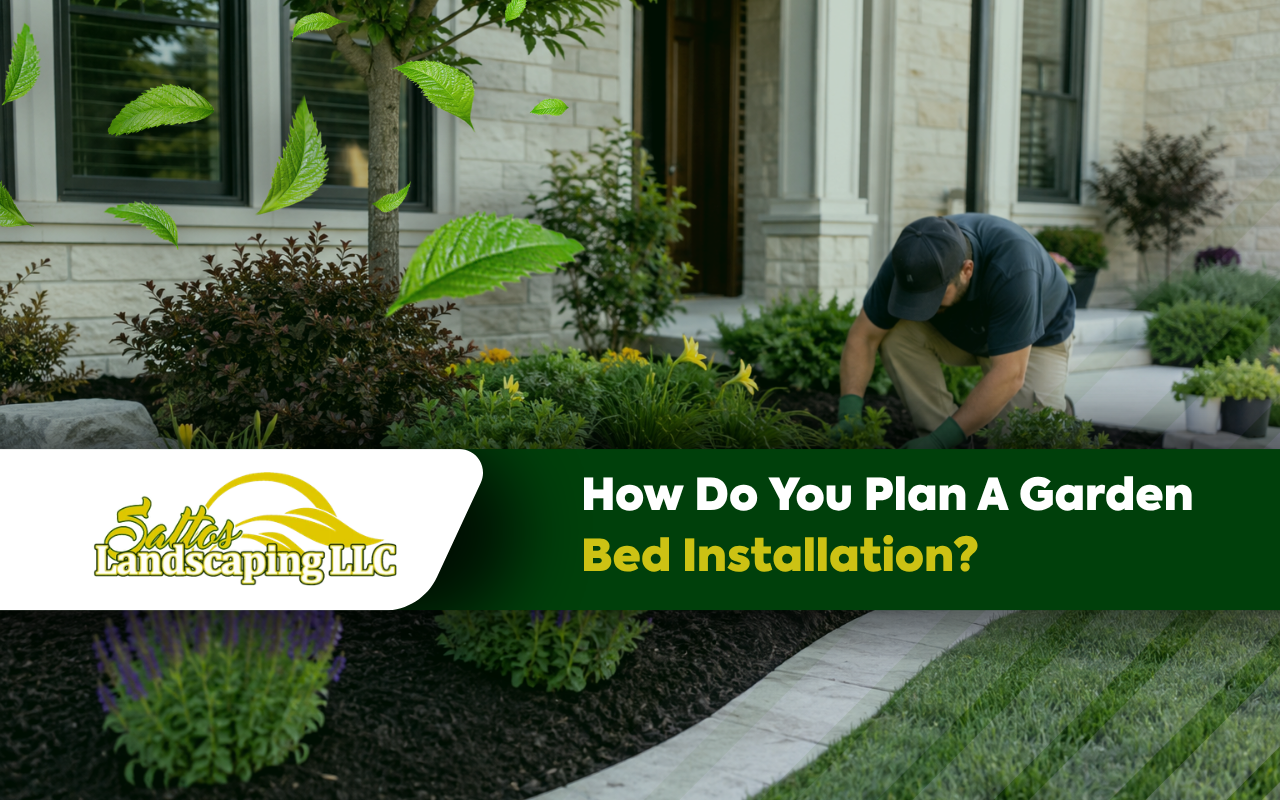
A well-planned garden can make your yard feel brighter, cleaner, and more welcoming. Garden bed installation creates defined spaces for flowers, shrubs, and seasonal color. At Saltos Landscaping LLC, we plan each bed around your property, daily routine, and desired style. Therefore, your finished landscape becomes easier to enjoy and maintain.
How Do You Plan A Garden Bed Installation?
Garden bed installation starts with choosing a well-drained location, checking sunlight, preparing healthy soil, and planning enough space for mature plants. Next, secure the edging, place each plant, and add mulch. Therefore, careful planning creates a cleaner garden that supports healthy growth and requires less routine care.
Choose A Suitable Location For Stronger Plant Growth
First, observe sunlight across your yard during the day. Most flowering plants need several hours of direct sunlight. However, shade-loving plants perform better beneath trees or beside covered areas.
Next, check how water moves after heavy rain. Avoid low areas where water remains for long periods. Otherwise, wet soil may weaken roots and damage sensitive plants.
Additionally, consider access to an outdoor faucet or irrigation line. Nearby water makes regular care easier during warm and dry weather. Meanwhile, clear pathways allow safe access for pruning, planting, and garden bed cleanup.
Before selecting the final location, review these important details:
- Measure the available planting space.
- Track sunlight during morning and afternoon hours.
- Check drainage after rainfall.
- Keep the bed near a practical water source.
- Leave enough room for walking and maintenance.
Front yard garden beds should also support your home’s appearance. For example, curved beds can soften straight driveways and walkways. In contrast, square beds can complement modern homes and formal landscapes.
At Saltos Landscaping LLC, we consider the entire property before recommending a location. Therefore, the new bed can connect naturally with lawns, trees, paths, and outdoor features.
Select Durable Materials That Complement Your Home Style
Garden bed materials affect strength, appearance, and future care. Therefore, each material should match your home’s style and local weather conditions.
Wood creates a warm and natural border for raised garden beds. However, rot-resistant wood usually lasts longer in wet ground. Metal creates clean lines, while stone and brick produce a classic appearance.
Composite boards can also create firm and tidy borders. Moreover, they resist rot and require little surface care. Still, every border needs a stable and level foundation.
Consider these features before choosing your materials:
- Use outdoor materials that tolerate moisture.
- Choose safe edges near paths and play areas.
- Match border colors with existing outdoor features.
- Select a height that keeps soil contained.
- Confirm that every section remains secure.
Decorative garden edging provides another practical finishing detail. It keeps mulch inside the bed and slows grass growth. Consequently, mowing and trimming become faster and easier.
Shape A Balanced Layout That Improves Yard Flow
Before digging, sketch the proposed layout on paper. First, mark permanent features, including trees, paths, patios, and driveways. Then, draw several possible shapes around those areas.
Curved lines create a relaxed and natural feeling. Meanwhile, straight borders can produce a simple and organized appearance. Both styles can work when they match the surrounding landscape.
A thoughtful shrub bed design uses different plant heights. Place taller shrubs near the back of a narrow bed. Alternatively, place them near the center of an open bed.
Then, add medium plants and lower ground covers around them. This arrangement creates depth without hiding smaller plants. Moreover, proper spacing allows air to move between branches and leaves.
During flower bed installation, repeat selected colors across the bed. Repeated plant groups create a connected appearance. In contrast, too many unrelated plants can make a small space feel crowded.
For more ideas about professional garden care, explore gardening services.
Prepare Healthy Soil Before Placing Flowers And Shrubs
Healthy soil supports strong roots, steady moisture, and better plant growth. Therefore, soil preparation should happen before flowers or shrubs enter the bed.
First, remove grass, weeds, rocks, roots, and unwanted debris. Next, loosen compacted ground carefully. However, avoid working very wet soil because it may become harder afterward.
Then, mix suitable compost into the existing soil. Compost can improve soil texture and support healthy plant life. Nevertheless, the correct amount depends on the current ground conditions.
Follow these steps during soil preparation:
- Mark the complete garden bed boundary.
- Remove existing grass and visible weeds.
- Loosen compacted soil across the planting area.
- Add compost based on the soil condition.
- Level the surface and fill low sections.
- Water lightly before beginning the planting work.
Heavy clay may need organic matter that improves airflow and drainage. Meanwhile, sandy soil may need material that holds moisture longer.
At Saltos Landscaping LLC, we prepare planting areas according to their planned use. As a result, each plant begins with a more supportive foundation.
Install Your New Garden Bed Through Clear Steps
A clear process keeps garden bed installation organized and reduces avoidable mistakes. Therefore, complete each stage before moving to the next one.
Mark the Garden Bed Boundary
First, use a garden hose, marking paint, or stakes to outline the bed. Then, view the shape from several directions. This step helps confirm that the size fits your yard.
Remove Grass and Unwanted Growth
Next, remove grass and weeds inside the marked area. Additionally, collect roots that may grow back through the prepared soil.
Improve and Level the Soil
After clearing the space, loosen the ground and add suitable compost. Then, level the surface while maintaining proper drainage away from structures.
Place Plants With Proper Spacing
Before digging holes, arrange every plant on the soil surface. This approach lets you adjust colors, heights, and spacing. Moreover, it prevents repeated digging.
Add Edging and Protective Mulch
Finally, secure the border and complete the mulch bed installation. Apply mulch evenly without covering plant stems. Consequently, the surface stays cleaner and loses moisture more slowly.
With Saltos Landscaping LLC, you receive practical guidance throughout the project. Therefore, every stage supports a clean, balanced, and useful finished space.
Match Plants With Available Light And Local Conditions
Plant choices should follow the real conditions inside each bed. Therefore, check sunlight, drainage, space, and seasonal weather before selecting plants.
Sunny beds can support many flowering perennials, ornamental grasses, and compact shrubs. However, shaded spaces need plants that tolerate limited direct sunlight.
Native and locally suitable plants can adapt more easily to regional conditions. Moreover, they may need less extra care after becoming established.
Combine different textures, heights, and flowering periods. For example, low plants can soften the front border. Meanwhile, medium flowers can fill open areas between larger shrubs.
Always consider the plant’s mature size. Small new plants may appear widely spaced at first. Nevertheless, correct spacing prevents crowding and supports healthier airflow later.
When planning beds near existing trees, read 5 best trees for front yard.
Reduce Regular Maintenance With Practical Design Decisions
Low-maintenance garden beds begin with realistic design choices. First, group plants that need similar sunlight and water. Therefore, each section receives more consistent care.
Next, select plants that fit the available space when mature. Oversized plants often need repeated cutting. In contrast, properly sized plants remain balanced for longer periods.
These design choices can reduce routine work:
- Use mulch to slow weeds and moisture loss.
- Install strong edging around the complete border.
- Choose hardy plants suited to local conditions.
- Leave open access for watering and pruning.
- Remove young weeds before their roots spread.
Drip lines and soaker hoses can send water near plant roots. Consequently, less water reaches paths, leaves, and uncovered areas. Additionally, automatic timers can support regular watering schedules.
At Saltos Landscaping LLC, we plan low-maintenance garden beds around each homeowner’s routine. Therefore, the landscape can stay attractive without demanding constant attention.
Protect Your Garden Beds Through Every Changing Season
Seasonal maintenance keeps planting areas healthy and orderly. In spring, remove fallen debris and damaged plant parts. Then, inspect the edging and replace missing mulch.
During summer, check soil moisture before watering. Additionally, remove faded flowers when trimming encourages new blooms. Early weed removal also prevents larger cleanup tasks.
In fall, collect unhealthy plant material and add compost when appropriate. Moreover, protect sensitive roots before colder weather arrives.
During winter, inspect shrubs after wind, snow, or heavy rain. However, avoid pruning every plant during the same season. Different species have different pruning needs.
Regular garden bed cleanup also improves the overall appearance. Therefore, remove litter, broken branches, and invasive growth before they spread.
For more seasonal care advice, check out our landscaping maintenance tips.
Enhance Your Landscape With Professional Planning And Care
A successful garden bed combines design, soil, plants, edging, mulch, and maintenance. Although each step seems simple, every choice affects the finished result.
Professional planning can prevent weak drainage, poor spacing, and unsuitable plant choices. Therefore, expert support may reduce future changes and difficult maintenance.
Our team at Saltos Landscaping LLC listens before recommending a design. Moreover, we consider your home’s appearance, available space, and preferred level of care.
Whether you need raised garden beds or a complete flower bed installation, we can guide your project. We can also refresh front yard garden beds and existing shrub areas.
When customers contact Saltos Landscaping LLC, we explain practical options for their property. Consequently, homeowners can make clearer decisions before work begins.
To discuss your garden bed installation plans, stop by our contact page.
Frequently Asked Questions
What does garden bed installation usually include?
Garden bed installation may include planning, grass removal, soil preparation, edging, planting, and mulch. However, every property has different needs. At Saltos Landscaping LLC, we review the area before explaining the recommended work. Learn more through gardening services page.
Where should a new flower bed be placed?
A flower bed should match the area’s sunlight, drainage, visibility, and water access. Additionally, the location should remain easy to reach. To discuss a suitable area, use our consultation page.
How can garden beds require less routine care?
Choose suitable plants, install firm edging, and apply mulch. Moreover, group plants with similar water needs. For additional care guidance, read our landscaping maintenance tips.
Are raised garden beds useful in small yards?
Yes, raised garden beds can fit narrow yards and compact planting areas. Furthermore, their height can make planting and care easier. The correct size depends on access, sunlight, and selected plants. Explore our landscape design services for more planning ideas.
Which plants work well around front yard trees?
The best plants depend on shade, roots, moisture, and available growing space. Therefore, choose varieties that tolerate those conditions. Start with 5 best trees for front yard.
References: