
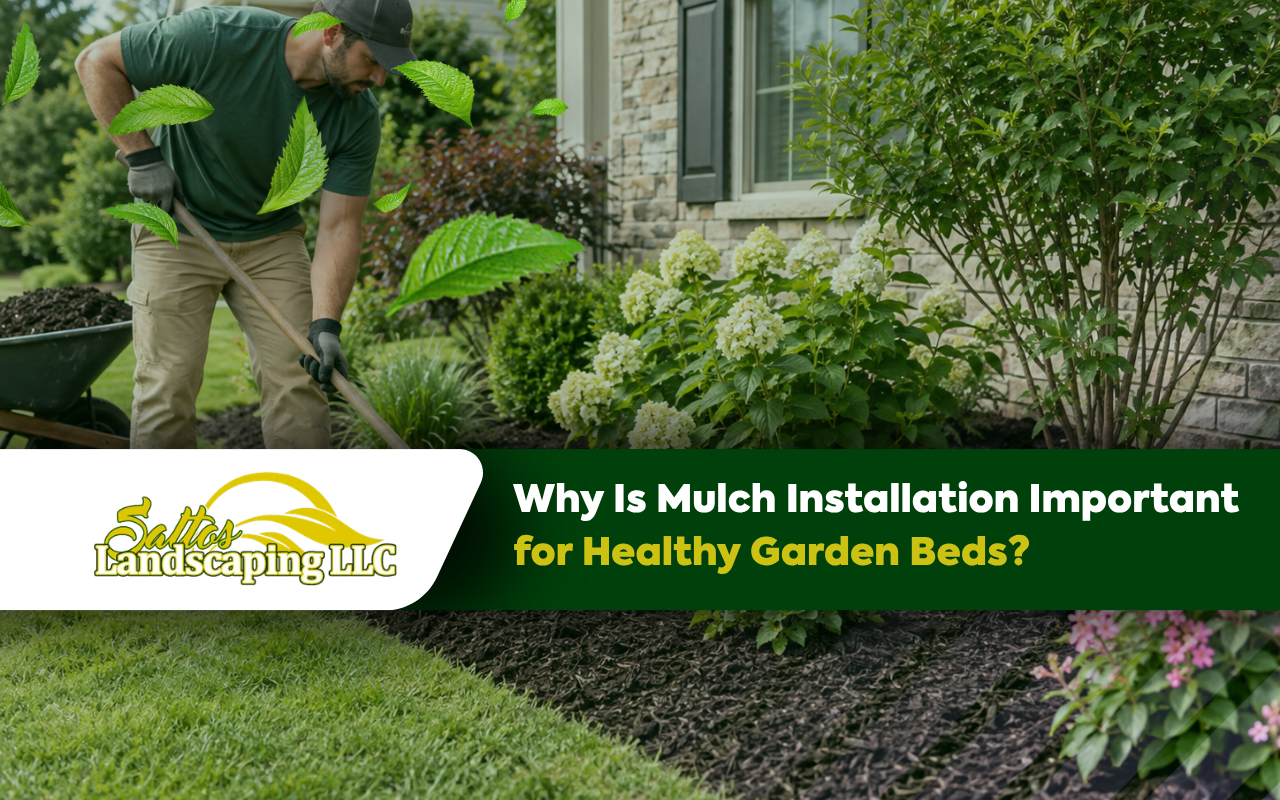
Mulch installation is important because it helps garden beds hold moisture, limit weeds, protect soil, and maintain steadier temperatures. With the right mulch depth and regular care, your beds can stay healthier, cleaner, and more attractive throughout the seasons.
At Saltos Landscaping LLC, we also use careful garden bed care to support healthier outdoor spaces. Proper material, placement, and timing all matter. Moreover, regular checks help homeowners avoid thick layers, bare areas, and mulch packed against plants.
Select the Right Mulch Type for Healthier Garden Beds
Different gardens need different materials. For example, bark mulch creates a natural appearance around trees, shrubs, and planting areas. Organic materials also slowly break down. As a result, they can become part of the soil over time.
However, the right choice depends on your plants, weather, and preferred look. Therefore, consider how quickly the material dries and how often you want maintenance.
- Use bark mulch when you want a natural garden appearance.
- Consider shredded leaves for planting areas that need simple organic coverage.
- Use coarse materials where better drainage may be useful.
- Pick materials that fit the colors and style around your home.
For additional planting support, explore our professional gardening support. This resource can help you understand broader care needs around your outdoor spaces.
Set the Correct Mulch Depth for Better Coverage
Proper mulch depth helps create reliable coverage without placing unnecessary pressure around roots. Generally, a layer between two and four inches works well. However, the exact amount can depend on the material and existing conditions.
Too little material may leave open soil where weeds can develop. On the other hand, very deep layers may hold too much moisture. Therefore, check the existing layer before adding more.
At Saltos Landscaping LLC, we recommend keeping material away from trunks and plant stems. This small gap allows better airflow around the plant base. Additionally, it reduces the chance of constant moisture sitting against sensitive areas.
Prepare Garden Beds Carefully for Fresh Mulch Coverage
Good preparation makes mulch installation cleaner and more effective. First, remove visible weeds, loose branches, leaves, and unwanted debris. Next, check the soil surface for low spots and uneven areas.
Then, gently level the bed before spreading fresh material. Clear edges also help mulch beds stay separate from grass, paths, and nearby surfaces. Consequently, finished beds look more organized.
Flower bed mulch works best when plants still have enough open space around their bases. Therefore, avoid covering stems or small plant crowns. You can also review our garden care advice for additional ideas about keeping outdoor areas in good condition.
Apply Mulch Evenly With Simple Steps Around Plants
Even coverage creates a cleaner appearance and gives each part of the bed similar protection. At Saltos Landscaping LLC, we prefer working in manageable sections. This approach makes the depth easier to control.
- Place small amounts of material throughout the prepared bed.
- Spread each pile gently with a rake or gloved hands.
- Check the mulch depth as you move through each section.
- Leave clear space around trunks, stems, and plant crowns.
- Finish by smoothing visible high spots and filling open gaps.
Additionally, avoid packing mulch down firmly. A loose layer allows water to move through more naturally. Therefore, plants can still receive moisture while the soil remains covered.
Maintain Mulch Beds Regularly for Long-Term Garden Health
Mulch beds change over time because of weather, normal breakdown, and garden activity. Therefore, occasional checks are an important part of garden bed care. At Saltos Landscaping LLC, we recommend looking for thin areas, compacted material, weeds, and exposed soil.
- Rake compacted material gently when the surface becomes hard.
- Pull new weeds before they become established.
- Check for bare soil after strong wind or heavy rain.
- Keep material pulled away from tree trunks and stems.
Weed control mulch works best when coverage remains consistent. However, mulch does not remove every possible weed. Regular inspection still matters because seeds can sometimes settle on top of the material.
If your landscape includes trees, our tree selection guide also explains useful considerations for planning attractive outdoor spaces.
Refresh Old Mulch Seasonally for Cleaner Stronger Beds
Organic materials slowly fade, settle, and break down. Consequently, mulch replacement becomes necessary over time. Instead of automatically adding a thick new layer, first check what remains in the bed.
If plenty of material is still present, lightly raking it may restore a cleaner appearance. However, thin areas may need a fresh top layer. Seasonal mulching can also prepare beds for changing temperatures and weather conditions.
At Saltos Landscaping LLC, we encourage homeowners to inspect beds before major seasonal changes. For colder conditions, our winter garden protection guide explains how seasonal coverage can support garden roots.
Prevent Common Mulching Problems With Smarter Bed Care
Several common problems come from using too much or too little material. For example, exposed soil may allow weeds to return quickly. Meanwhile, overly thick layers can stay wet for long periods.
Mold can sometimes appear when organic material remains very damp. Therefore, lightly loosen affected areas and allow more airflow. Also, move material away from plant stems if it has collected around them.
If weeds continue appearing, remove them before they spread. Then, check whether the bed has enough consistent coverage. A balanced weed control mulch layer blocks some sunlight while still allowing water to move toward the soil.
Mulch replacement may also solve areas where older material has broken down heavily. However, always check the current mulch depth before adding more.
Enhance Garden Style Through Thoughtful Mulch Design Choices
Mulch can support garden health while improving the way planting areas look. Dark bark mulch can create strong contrast around green plants. Meanwhile, lighter materials can give gardens a softer and more natural appearance.
Flower bed mulch can also define planting zones and make colorful flowers stand out. Additionally, clear bed edges create a more finished appearance between lawns and planted spaces.
At Saltos Landscaping LLC, we see mulch installation as both practical care and an important finishing detail. The right material can connect trees, shrubs, flowers, and nearby landscape features.
Most importantly, consistent care keeps the finished result looking neat. Proper preparation, suitable depth, seasonal mulching, and timely replacement can support attractive beds throughout the year.
When you want help improving your garden areas, you can reach our team. We can discuss your outdoor space and the next steps for practical landscape care.
Frequently Asked Questions
How often should mulch beds receive fresh material?
The timing depends on how quickly the existing material settles and breaks down. Therefore, inspect beds before automatically adding more. For seasonal guidance, review our winter garden protection resource.
What should I do before adding new mulch?
First, remove weeds and loose debris. Then, level the soil and check the existing material. For broader maintenance ideas, explore our garden care advice.
Can mulch be placed around trees and shrubs?
Yes. However, keep material away from trunks and plant bases. This space supports better airflow around sensitive areas. Our tree selection guide offers additional information about planning around trees.
Does mulch completely stop weeds from growing?
No. However, proper coverage can reduce the sunlight that many weed seeds need. Regular maintenance is still important. Our professional gardening support page explains more about caring for garden spaces.
Who can help with professional garden bed care?
At Saltos Landscaping LLC, we can discuss your landscape needs and suitable care options. Therefore, use our consultation page when you are ready to discuss your outdoor areas.
References:
Do I Have to Reapply Mulch in Midsummer? How to Know When It’s Time to Top Up Your Beds — Gardening Know How
We Asked Garden Pros If Mulching Prevents Weeds—They Both Said the Same Thing — The Spruce