
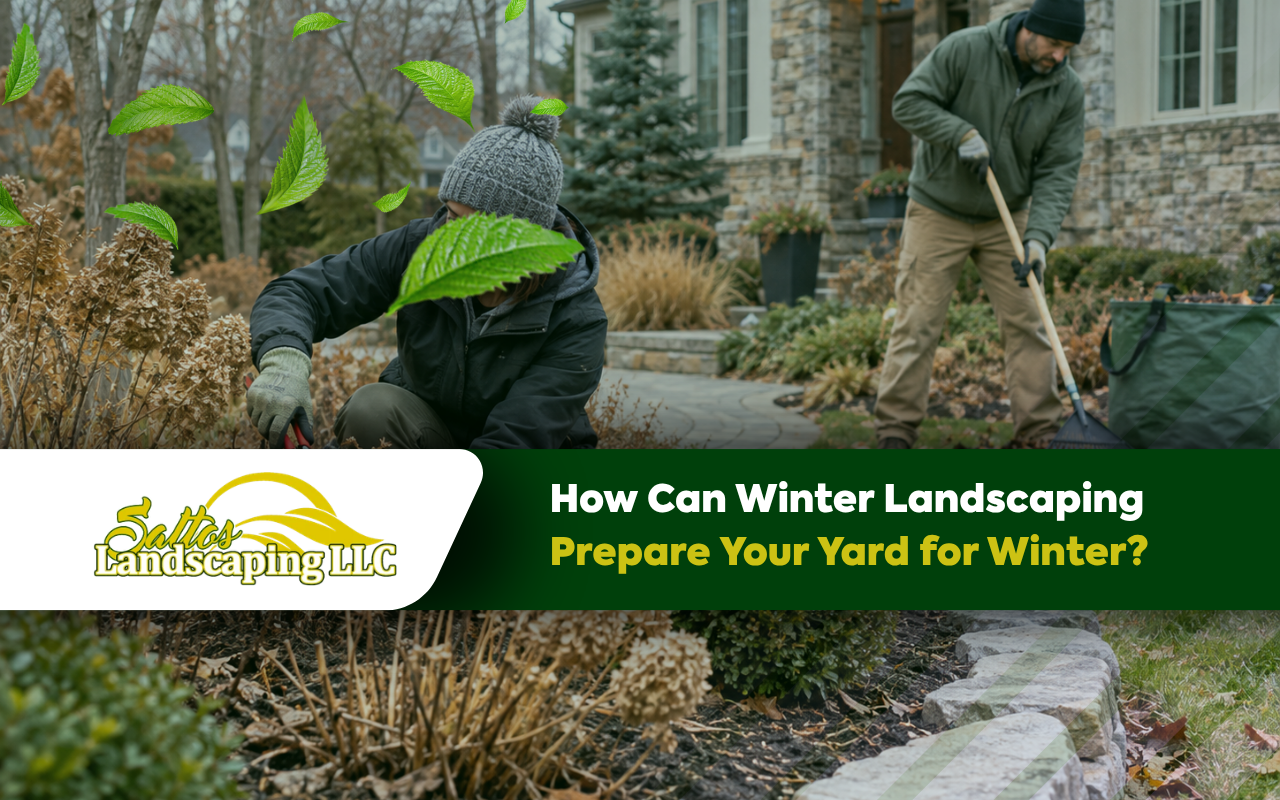
Cold weather can affect lawns, plants, soil, drainage, and outdoor spaces. However, good preparation can reduce seasonal damage and support healthier spring growth. At Saltos Landscaping LLC, we use winter landscaping to protect important yard areas, control moisture, reduce debris, and prepare outdoor spaces for changing winter conditions.
Winter landscaping prepares your yard by protecting roots, managing water, clearing debris, and reducing cold-weather stress. It also keeps lawns and planting beds easier to maintain. Therefore, a good seasonal plan combines plant care, mulch, drainage checks, cleanup, and regular outdoor maintenance. At Saltos Landscaping LLC, we focus on practical steps that support each part of the yard.
Choose Hardy Plants That Add Lasting Winter Interest
First, pick plants that can handle colder temperatures and changing moisture levels. Hardy plants can maintain structure when many seasonal flowers disappear.
Evergreen shrubs are useful because they keep their foliage through winter. Meanwhile, ornamental grasses can add movement, height, and texture.
Additionally, shrubs with colorful berries can brighten areas that otherwise look bare. Therefore, combining different forms creates a more attractive seasonal landscape.
At Saltos Landscaping LLC, we consider sunlight, soil, drainage, and available space before choosing plants. This approach supports better plant protection throughout colder months.
- Choose evergreen shrubs for dependable color and structure.
- Add ornamental grasses for texture and movement.
- Select cold-tolerant plants suited to local conditions.
- Use berry-producing shrubs for extra seasonal color.
- Group plants with similar light and moisture needs.
Moreover, proper placement can make seasonal landscaping easier to manage. Plants with similar needs can receive more consistent care throughout winter.
Protect Garden Beds With Smart Mulch Placement Techniques
Mulch protection can help reduce sudden temperature changes around plant roots. It can also help soil hold moisture during dry winter periods.
However, mulch should not rest directly against trunks or plant stems. Excess material in those areas can hold unwanted moisture.
First, inspect the existing mulch depth. Then, add material only where another protective layer is useful.
Next, spread mulch evenly around shrubs, trees, and perennial beds. Additionally, leave a clear space around trunks and plant crowns.
At Saltos Landscaping LLC, we include careful mulching in winter yard prep when conditions require it. Therefore, each bed receives protection without unnecessary buildup.
For more seasonal details, review our seasonal mulching guidance. It explains practical ways to protect roots and planting areas during colder conditions.
Inspect Drainage Areas Before Cold Weather Creates Problems
A drainage check is another important part of winter preparation. Water that remains in low areas can create problems during colder weather.
Therefore, inspect the yard after steady rainfall whenever possible. Look for puddles around beds, lawns, paths, slopes, and downspouts.
Also, check whether leaves or other debris are blocking normal water movement. Small obstructions can sometimes cause larger wet areas.
- Clear leaves from visible drainage paths.
- Check low areas where water collects after rain.
- Inspect downspouts and nearby runoff areas.
- Keep walkways clear of wet organic debris.
- Watch for soil that stays saturated for long periods.
Moreover, irrigation systems need attention before freezing conditions arrive. Water left inside vulnerable components may create avoidable problems.
Our irrigation cold-weather preparation guide explains useful steps for preparing the system before colder temperatures.
Support Your Lawn With Consistent Cold-Season Care Practices
Lawn winter care should change as grass growth slows. Therefore, winter maintenance should focus on protection rather than rapid growth.
First, remove thick leaf layers that can cover the grass for long periods. However, avoid unnecessary work when the lawn is frozen.
Also, limit heavy foot traffic across very wet or frozen grass. These conditions can make grass more vulnerable to visible damage.
During dry periods, check soil moisture before adding water. Meanwhile, naturally wet conditions may reduce the need for additional irrigation.
At Saltos Landscaping LLC, we adjust lawn care to current yard conditions instead of following one fixed routine. This creates a simpler seasonal approach.
For additional guidance, use our cold-season lawn care checklist. It covers practical ways to manage mowing, frost, moisture, and seasonal lawn conditions.
Complete Winter Cleanup Before Debris Causes Lasting Damage
Winter cleanup keeps outdoor spaces organized while reducing heavy debris around lawns, beds, paths, and drainage areas. Therefore, regular cleanup supports easier maintenance.
First, remove fallen branches from safe and reachable areas. Next, clear thick piles of leaves from grass and walking surfaces.
However, every planting bed does not need to become completely bare. Healthy ornamental grasses can still provide useful winter texture.
Likewise, some plant material may remain when it does not create safety or maintenance problems. The goal is balanced seasonal care.
- Remove broken or fallen branches from accessible areas.
- Clear heavy leaf layers from lawn sections.
- Remove slippery debris from paths and steps.
- Keep drainage areas open for water movement.
- Store loose outdoor items before severe weather.
At Saltos Landscaping LLC, we combine winter cleanup with general outdoor maintenance observations. As a result, small concerns can be noticed before spring arrives.
Follow These Steps To Ready Your Yard Efficiently
A clear routine makes winter yard prep easier to manage. Therefore, work through the property in a simple order.
- First, walk through the lawn, beds, paths, and planted areas.
- Next, remove heavy debris and identify damaged plants or branches.
- Then, complete a drainage check after rainfall when possible.
- Afterward, inspect soil moisture and irrigation components.
- Next, refresh mulch protection where beds need additional coverage.
- Then, secure sensitive plants before colder weather arrives.
- Finally, clean and store garden tools in a protected area.
This process keeps seasonal landscaping focused on the areas that need attention first. Moreover, it prevents small tasks from becoming difficult to organize.
For broader upkeep guidance, explore our practical property care tips. These ideas can help you organize maintenance during every season.
Strengthen Plant Protection With Covers And Careful Pruning
Sensitive plants may need additional protection when freezing temperatures are expected. Therefore, breathable coverings can help reduce exposure during cold periods.
Frost cloth, sheets, or similar covers can protect tender plants. However, covers should sit securely without crushing delicate branches.
Additionally, remove coverings when conditions improve and plants need normal light and airflow. Container plants may also need a more protected location.
Pruning requires careful timing as well. First, remove clearly broken or unsafe branches when the work can be completed safely.
However, avoid heavy trimming simply because winter has started. Different plants respond better to pruning at different times.
At Saltos Landscaping LLC, we consider the condition and type of plant before recommending seasonal trimming. Therefore, plant protection remains the priority.
Enhance Outdoor Spaces With Practical Winter Design Features
A winter yard can remain attractive even when many plants are dormant. Evergreen plants can provide steady color and strong shapes.
Meanwhile, ornamental grasses, stone areas, paths, and raised beds can maintain visual structure. These features also create interest on gray winter days.
Outdoor lighting can improve visibility around paths and important landscape areas. Additionally, carefully placed lighting can highlight trees, walls, and garden features.
Good design can also simplify outdoor maintenance. Clear paths make cleanup easier, while organized beds improve access for plant and drainage checks.
At Saltos Landscaping LLC, we consider appearance and everyday function together. As a result, winter landscaping can protect your yard while keeping it inviting.
Ultimately, seasonal care does not require complicated changes. Consistent checks, sensible protection, and timely cleanup can make a meaningful difference.
When you want support preparing your property, you can reach our landscaping team to discuss your outdoor needs.
Frequently Asked Questions
How Should I Prepare My Lawn Before Winter?
First, remove heavy leaves and adjust mowing as grass growth slows. Also, avoid heavy traffic across frozen or saturated turf. For more guidance, follow our cold-season lawn care checklist before colder conditions become frequent.
Why Does Mulch Matter During Colder Weather?
Mulch helps reduce fast temperature changes around roots. Additionally, it can support moisture control in planting beds. Our seasonal mulching guidance explains how to use protective material around plants correctly.
When Should I Winterize My Irrigation System?
Ideally, prepare the system before freezing conditions can affect water-filled components. Therefore, early planning can reduce unnecessary risks. Review our irrigation cold-weather preparation guide for useful seasonal information.
What Outdoor Tasks Matter Most During Winter?
Focus on cleanup, drainage, plant protection, lawn checks, and general maintenance. Moreover, inspect the property regularly after changing weather. Our practical property care tips can help organize these routine tasks.
How Can I Get Help Preparing My Yard?
First, identify concerns involving your lawn, plants, irrigation, drainage, or cleanup needs. Then, contact us to discuss practical next steps for your property.
References: