
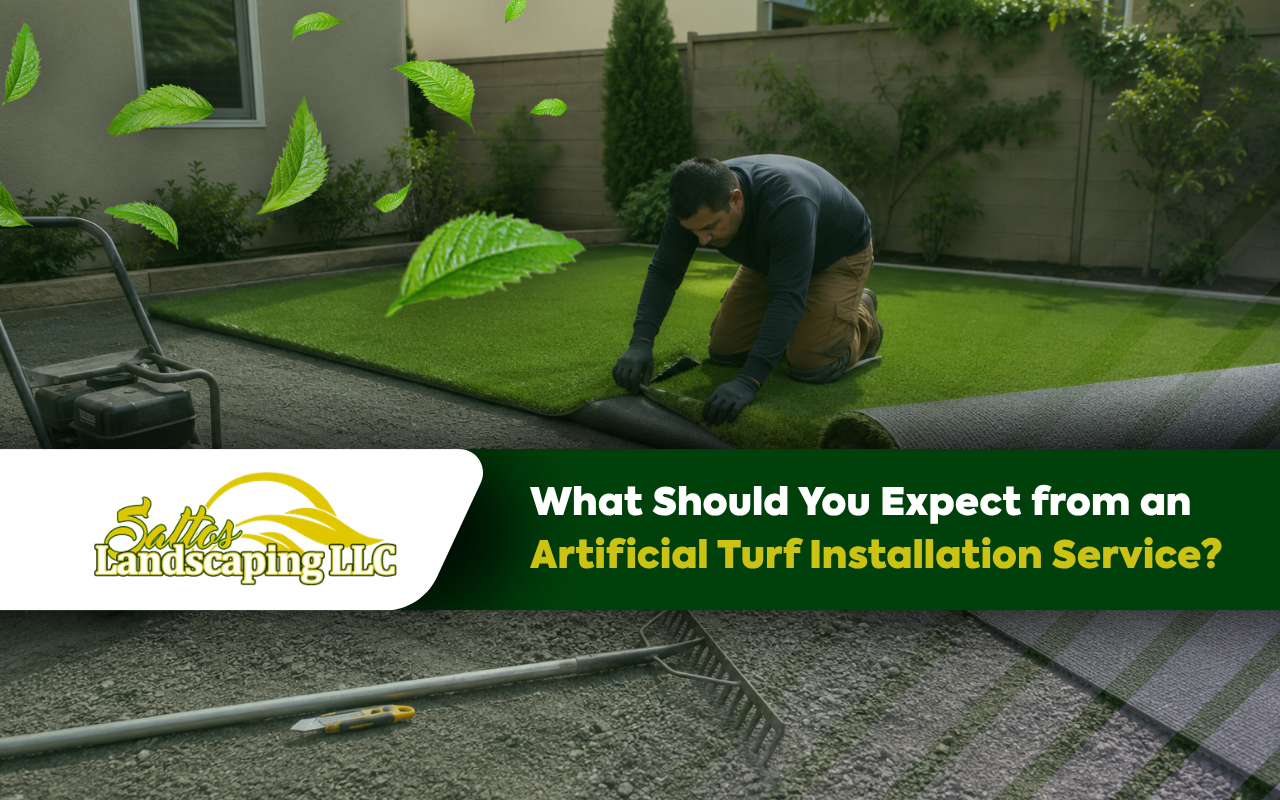
Artificial turf can create a clean, green lawn without constant mowing, watering, or reseeding. However, lasting results depend on careful preparation and professional installation. A complete service should include ground removal, grading, base construction, drainage planning, turf placement, secure seams, infill, and final grooming.
What Should You Expect from an Artificial Turf Installation Service?
An artificial turf installation service should manage every important stage of your lawn project. First, the team should inspect the yard and discuss how you use it. Then, they should prepare a stable base, plan water flow, secure the turf, and complete the surface carefully.
At Saltos Landscaping LLC, we explain each stage before the work begins. Therefore, you understand what your yard needs and what the installation will involve.
Discover Practical Benefits of a Professionally Installed Synthetic Lawn
A professionally installed lawn can remove many common yard chores. For example, artificial grass installation eliminates weekly mowing and regular reseeding.
Additionally, the surface stays green during dry periods and wet seasons. It also avoids many muddy spots, weeds, and worn natural-grass areas.
- Reduce time spent mowing and watering the lawn.
- Keep the surface green throughout every season.
- Create cleaner areas for children and pets.
- Prevent many common weeds and bare patches.
- Limit the need for fertilizers and lawn equipment.
Low-maintenance turf still requires occasional cleaning. However, routine care is usually much easier than natural lawn maintenance.
Our team at Saltos Landscaping LLC can also connect turf with patios, pathways, and planting areas. As a result, the lawn becomes part of a complete outdoor design.
Explore our synthetic grass service page to learn more about available solutions.
Pick Turf Features That Fit Your Household Needs
Not every turf product works equally well in every yard. Therefore, your choice should reflect how the space will be used.
For example, pet-friendly artificial turf should support fast drainage and easy cleaning. Meanwhile, family play areas may need softer blades and stronger backing.
A decorative front yard may focus more on natural color and texture. However, a busy backyard may require denser fibers and greater wear resistance.
Compare Essential Turf Features Before Selecting Your Material
- Blade softness: Softer fibers feel more comfortable under bare feet.
- Blade density: Denser turf can handle frequent activity more effectively.
- Backing quality: Permeable backing supports faster water movement.
- Sun resistance: UV protection helps reduce fading from sunlight.
- Color variation: Mixed shades create a more natural appearance.
At Saltos Landscaping LLC, we help you compare these features in simple terms. Then, we recommend suitable choices for your household and outdoor goals.
Prepare Your Yard to Support Long-Lasting Turf Results
Proper preparation is essential for a successful backyard turf installation. First, the crew must remove grass, roots, rocks, and loose soil.
Next, the ground should be shaped and graded. This step creates an even surface and guides water away from buildings.
A layer of crushed stone or gravel is then added. Afterward, the crew compacts the material to create a firm foundation.
- Remove the existing lawn, roots, weeds, and debris.
- Inspect the soil and identify natural water paths.
- Grade the area away from nearby structures.
- Add the required gravel or crushed-stone base.
- Compact the base to reduce future movement.
- Smooth the surface before placing the turf.
Without careful preparation, synthetic lawn installation can develop bumps or low areas. Moreover, weak ground may cause seams or edges to shift.
Therefore, the quality beneath the turf matters as much as the visible surface.
Follow Proven Steps for a Smooth Turf Installation
A professional installation should follow a clear sequence. First, the team confirms measurements, access points, and the planned lawn layout.
Then, the existing surface is removed and the base is prepared. Afterward, the turf rolls are positioned in the same blade direction.
Each section is trimmed around borders, trees, pathways, and garden features. Next, the seams are joined and the outside edges are secured.
How to Complete a Reliable Artificial Turf Installation
- Inspect the yard and confirm the project layout.
- Remove the old surface and unwanted materials.
- Grade and compact the supporting base layer.
- Place every turf section in one direction.
- Trim the material around landscape borders.
- Join each seam without visible gaps.
- Secure the edges to prevent movement.
- Spread the correct infill across the lawn.
- Brush the fibers for a finished appearance.
Infill helps support the grass blades and adds stability. Finally, brushing lifts the fibers and spreads the infill more evenly.
During projects, our team at Saltos Landscaping LLC explains important site decisions. Therefore, you remain informed throughout the installation.
Improve Water Flow with Proper Turf Drainage Planning
Artificial turf drainage begins below the visible lawn. Therefore, the base must let water move through and away from the area.
The turf backing should also contain openings for water passage. However, permeable turf cannot correct a poorly prepared foundation alone.
The installer should grade the ground toward a safe drainage area. Additionally, wet locations may need gravel trenches or another drainage solution.
- Use turf backing that allows water to pass.
- Build a stable and permeable gravel foundation.
- Direct water away from buildings and foundations.
- Add drainage channels in areas with heavy rainfall.
- Prevent leaves from blocking the lawn surface.
Proper drainage is especially useful for pet areas. It allows rinse water and rain to move below the surface more quickly.
As a result, the yard remains cleaner and easier to use after wet weather.
Maintain a Fresh Lawn with Simple Routine Care
Artificial turf needs less care than natural grass. Nevertheless, regular attention helps protect its appearance and useful life.
First, remove leaves, branches, and loose dirt before they collect. Then, brush busy sections to lift any flattened fibers.
For pet waste, remove solid material promptly. Afterward, rinse the affected area with clean water.
A mild soap solution can help with common spills. However, harsh chemicals and metal tools may damage the turf.
At Saltos Landscaping LLC, we share maintenance guidance for the selected material. Therefore, you can care for the lawn without creating a difficult routine.
Read practical maintenance tips for guidance about common turf concerns.
Transform Small Outdoor Areas into Useful Living Spaces
Artificial turf can improve more than a large backyard. For instance, it can cover side yards, pet runs, and narrow spaces.
It can also create soft sections between pavers or beside patios. Therefore, previously unused areas can become functional parts of the property.
- Create a clean play zone for children.
- Build a practical pet exercise area.
- Fill narrow spaces beside the home.
- Add green sections between stepping stones.
- Connect patios with outdoor seating areas.
A residential turf service can also coordinate the lawn with existing landscape elements. These may include garden beds, lighting, edging, and walkways.
At Saltos Landscaping LLC, we consider the complete outdoor space. As a result, the turf can support both appearance and daily use.
Reduce Ongoing Yard Work and Repeated Lawn Expenses
Artificial turf requires an initial investment. However, it can reduce several repeating lawn expenses over time.
For example, homeowners may use less irrigation water. They may also avoid mower fuel, grass seed, fertilizer, and regular lawn treatments.
Artificial turf does not last forever. Therefore, its long-term value depends on material quality, installation, use, climate, and maintenance.
A turf replacement service may become necessary when large areas become worn or damaged. However, some isolated problems may only require repairs.
Before replacement, the installer should inspect the seams, base, edges, and drainage. This inspection can identify the actual cause of the problem.
Learn about additional lawn advantages through our benefits of synthetic grass.
Plan Your Project with Clear Professional Installation Guidance
A detailed estimate should cover more than the turf material. Therefore, ask what preparation and finishing work the project includes.
The proposal should address removal, grading, base materials, drainage, seams, edges, infill, and cleanup. Additionally, it should identify any unusual site conditions.
Ask how the installer plans to manage slopes and wet areas. Also, discuss children, pets, furniture, and expected foot traffic.
With Saltos Landscaping LLC, you receive direct guidance before selecting your artificial turf installation service. We review your space and explain the recommended approach.
Therefore, you can compare the complete installation plan instead of choosing by surface appearance alone.
Begin planning your project through our contact page.
Frequently Asked Questions
What does an artificial turf installation service include?
An artificial turf installation service usually includes removal, grading, base preparation, turf placement, seams, infill, and grooming. However, the exact scope depends on the yard. Check out synthetic grass for more service information.
Can artificial turf create a safe pet area?
Yes, suitable pet-friendly artificial turf can create a clean, mud-free surface. However, proper drainage and regular cleaning remain important. Read the benefits of synthetic grass for more residential uses.
Why is the gravel base important beneath turf?
The base supports the lawn and controls surface movement. Additionally, it helps water travel away from the installed turf. Learn more through synthetic grass service.
How should homeowners clean their artificial lawn?
Remove debris regularly and rinse dusty or pet-used areas. Additionally, brush flattened fibers and treat spills with mild soap. Review practical maintenance tips for more care guidance.
How can homeowners request a turf project review?
Start by sharing the lawn size, planned use, access, and drainage concerns. Then, arrange an on-site discussion with our team. Reach us through our consultation page.
References: