
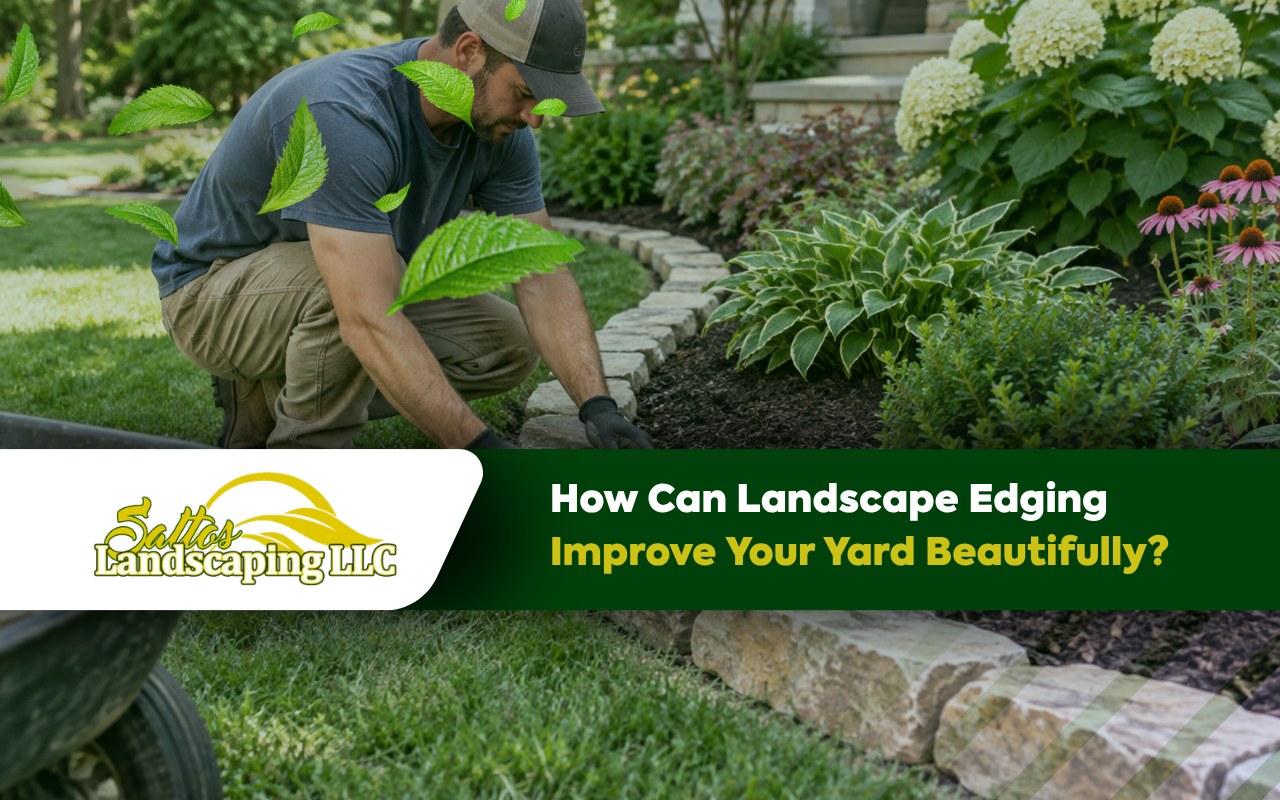
Landscape edging creates clear boundaries between grass, gardens, paths, and other outdoor areas. Therefore, it can make even a simple yard look more finished. It also keeps materials where they belong and reduces messy edges. With Saltos Landscaping LLC, you can plan borders that match your plants, walkways, and overall outdoor style while supporting easier yard care.
Pick Durable Borders That Improve Everyday Yard Maintenance
Different edging materials create different looks and serve different purposes. Therefore, the best choice depends on your yard, style, and maintenance needs. Brick, metal, stone, concrete, wood, and plastic can all create useful boundaries.
For example, brick gives garden edging a warm and traditional appearance. Bricks can follow straight lines or gentle curves. Moreover, they work well near lawns, planting areas, and pathways.
Metal creates a thinner and more modern border. Meanwhile, steel and aluminum can follow curves without taking much visual space. This option also works well for mulch bed edging because it helps keep mulch away from nearby grass or pavement.
Consider these common choices before selecting a border:
- Brick creates a classic and structured finish.
- Metal supports clean curves and narrow boundaries.
- Stone adds natural texture and lasting character.
- Concrete creates strong lines around modern outdoor areas.
- Wood adds warmth around gardens and informal spaces.
At Saltos Landscaping LLC, we recommend matching the border with nearby outdoor features. Therefore, homeowners planning patios or paths can also explore our hardscaping ideas for outdoor spaces before choosing complementary materials.
Shape Natural Stone Borders That Add Lasting Character
Natural stone edging works especially well when you want a softer outdoor look. Because every stone has a different shape, texture, and shade, the finished border feels less manufactured. Additionally, stone can connect planting beds with patios, water features, and walkways.
You can place stones in one simple row for a low boundary. Alternatively, larger pieces can form a small raised edge. A raised border can hold soil while giving flower bed borders more visual depth.
Stone also works well with many lawn border ideas. For example, a curved stone line can separate grass from a colorful garden. Meanwhile, a straighter stone edge can support a more formal yard border design.
Our team at Saltos Landscaping LLC can help you consider how borders relate to movement through the yard. Moreover, homeowners planning connected paths can review these garden walkway design ideas for additional inspiration.
Combine Pavers And Concrete To Create Modern Definition
Paver edging gives outdoor spaces a clean and flexible finish. Moreover, pavers come in many shapes, textures, and sizes. As a result, they can connect visually with patios, walkways, driveways, or other hard surfaces.
Concrete can also create strong landscape edging around planting beds and paths. However, careful placement matters because the border should support drainage rather than block water movement.
A simple modern plan may include:
- Low concrete strips beside planting areas.
- Pavers that match an existing walkway.
- Curved borders around larger garden beds.
- Contrasting textures between paths and planting areas.
- Low edges that make mowing easier.
Therefore, pavers and concrete can balance style with daily function. At Saltos Landscaping LLC, we also consider how each border fits the larger outdoor layout. This approach helps the yard feel connected instead of divided into unrelated pieces.
Blend Wood And Recycled Materials For Warmer Style
Wood creates a relaxed and natural border around gardens, vegetable beds, and pathways. Cedar and other outdoor-friendly woods can work well when installed carefully. Moreover, wooden borders are easy to shape around simple garden areas.
Reused materials can also add personality. For example, reclaimed bricks or usable pieces of timber may create interesting garden edging. However, every reused material should be stable, safe, and suitable for outdoor exposure.
These edging materials are especially useful when the goal is a less formal appearance. Additionally, mixed materials can make narrow or overlooked parts of a property more interesting.
When you work with us, our goal is to connect appearance with practical yard use. Therefore, our low maintenance side yard ideas can help you explore simple ways to improve difficult spaces.
Frame Flower Beds To Highlight Color And Texture
Well-planned flower bed borders help plants stand out while keeping surrounding areas tidy. Therefore, the border should support the flowers rather than compete with them. Low stone, metal, brick, or wood can all work well.
Mulch bed edging is also useful because it keeps mulch from spreading into nearby grass. Moreover, a clean edge can make seasonal maintenance faster. It also creates a clear line for mowing and trimming.
For a balanced flower bed, consider these ideas:
- Use low borders so flowers remain the main focus.
- Opt for colors that complement nearby plants and surfaces.
- Follow natural curves around larger planting beds.
- Keep mulch inside the bed with a stable edge.
- Leave enough space for plants to grow naturally.
At Saltos Landscaping LLC, we believe a border should support the whole yard. Therefore, good flower bed borders can improve both appearance and everyday care without making the garden feel overly designed.
Balance Border Materials To Support Form And Function
A successful yard border design considers beauty and purpose together. For example, metal may suit a clean modern space. Meanwhile, stone may fit a more natural garden. Brick can add tradition, while wood can soften harder surfaces.
Additionally, high-traffic areas often need stronger materials. Concrete, stone, and pavers usually handle regular activity well. Quieter planting areas may allow lighter or softer borders.
Maintenance should also guide your choice. Low borders can make mowing simpler. However, raised borders may control soil better on certain beds. Therefore, homeowners should consider how each area is used before choosing materials.
At Saltos Landscaping LLC, you can also review our practical landscaping maintenance tips when planning a yard that stays attractive through regular care.
Follow Simple Steps To Build Cleaner Garden Boundaries
Installing landscape edging starts with a clear plan. Therefore, first decide what needs separation. This may include grass and mulch, flowers and paths, or lawn and driveway areas.
Next, mark the desired line with stakes, string, or another simple guide. Curves should feel natural and remain easy to maintain. Afterward, prepare the ground according to the chosen material.
- Mark the border before removing any soil.
- Clear grass, roots, and loose material from the line.
- Dig a shallow trench where the border will sit.
- Level the base before placing each edging piece.
- Secure the material according to its design.
- Backfill gaps with soil, sand, or suitable gravel.
- Check the finished line and correct uneven sections.
Finally, inspect the border after heavy rain or regular yard work. Small adjustments can prevent bigger problems later. At Saltos Landscaping LLC, we can discuss your outdoor goals and help you request a yard consultation for your next improvement project.
Frequently Asked Questions
What type of edging works best around gardens?
The best choice depends on style, soil, traffic, and maintenance needs. Stone, brick, metal, and wood are all useful options. Moreover, you can compare border materials with our outdoor hardscape planning guide before deciding.
Can edging make lawn maintenance easier?
Yes. A defined border can separate grass from planting areas and create a cleaner trimming line. Therefore, regular care may become simpler. You can also follow our yard maintenance guidance for additional upkeep ideas.
Which border works well beside garden walkways?
Stone, brick, pavers, and low metal borders can all complement walkways. However, the best material should match the path and surrounding plants. For more ideas, explore our planning ideas for garden paths.
How can borders improve a narrow side yard?
Borders can separate paths, gravel, plants, and small garden beds clearly. As a result, narrow areas often feel more organized. Our simple side yard improvement ideas can help you plan these spaces.
When should homeowners consider professional landscape planning?
Professional planning can help when several materials, paths, beds, or drainage needs must work together. Therefore, guidance can prevent an uneven final layout. At Saltos Landscaping LLC, we invite you to plan your outdoor improvement with us.
Thoughtful landscape edging can turn loose outdoor areas into a connected design. Moreover, the right borders protect beds, guide movement, and simplify maintenance. Stone edging, paver edging, brick, metal, wood, and concrete each create a different effect. By combining practical lawn border ideas with suitable edging materials, you can build an outdoor space that feels cleaner, more useful, and more personal.
References: