
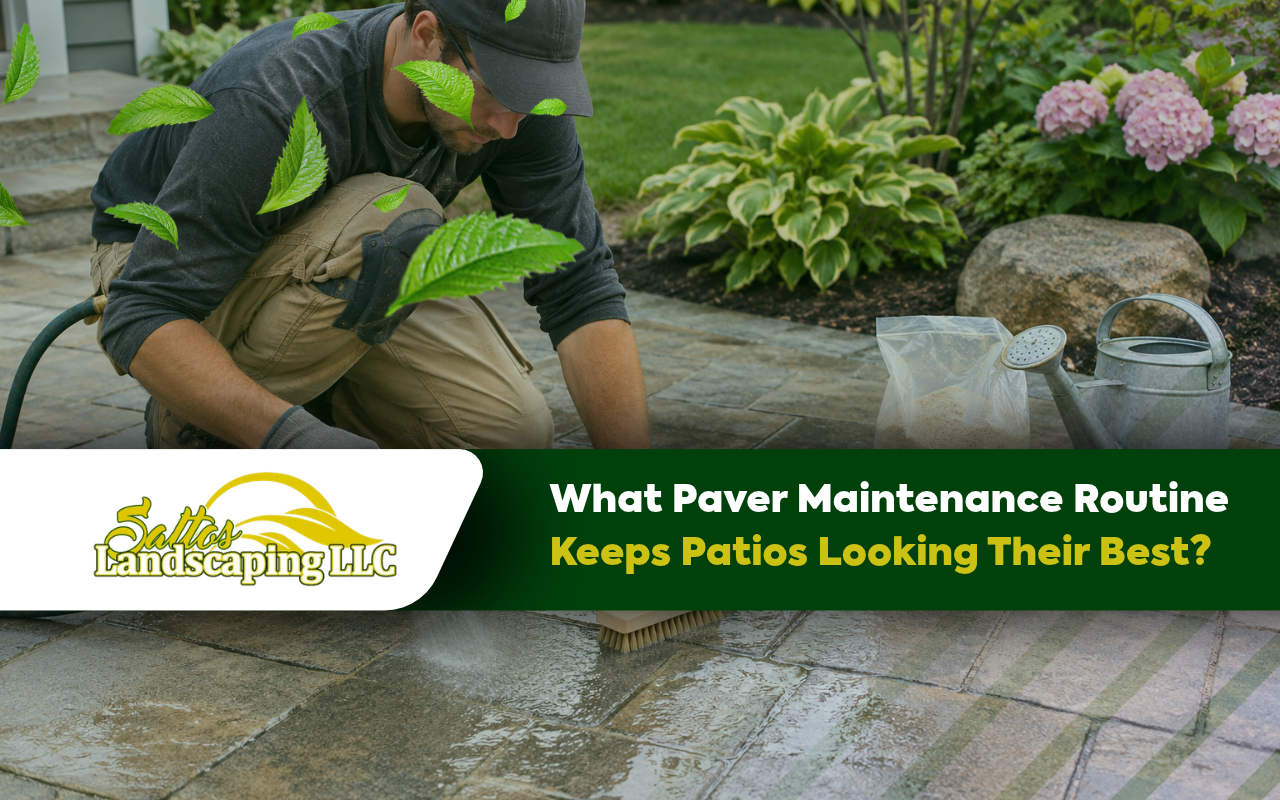
A good paver maintenance routine includes regular sweeping, gentle cleaning, joint inspection, repairs, and sealing when appropriate. First, remove debris before it settles into joints. Next, check for cracks, stains, weeds, and missing sand. Then, repair small problems early. Finally, use suitable paver sealing when the surface needs added protection. This routine helps patios and walkways stay clean, stable, and attractive.
Regular Inspections Reveal Small Problems Before Damage Spreads
First, walk across your paved area and look closely at each section. Small cracks, chips, dips, or loose pieces can signal early wear. In addition, gaps between pavers may show that joint material has moved or washed away. Therefore, regular checks are an important part of paver maintenance.
Next, look for areas that remain damp after rain. Moss or algae can grow where moisture stays longer. As a result, these areas may become slippery. Early attention supports safer patio paver care and more effective walkway maintenance.
- Check for cracked or chipped pavers.
- Look for uneven or loose sections.
- Notice missing joint sand.
- Remove weeds growing between joints.
- Watch for stains, moss, or algae.
- Review faded or blotchy areas.
At Saltos Landscaping LLC, we also consider how the entire outdoor area works together. Our hardscaping ideas for outdoor spaces explain how patios, paths, and built features can shape a useful landscape.
Routine Cleaning Preserves Color and Reduces Surface Buildup
Regular paver cleaning removes soil, leaves, and debris before stains become harder to manage. First, sweep the surface carefully. Then, use water and a mild cleaner made for the paver material. This simple routine also makes cracks and joint problems easier to notice.
However, avoid strong chemicals unless the product clearly suits that surface. Harsh cleaners may affect the color or an existing sealer. Therefore, always read the label first. Also, test a new product on a small, hidden area before treating a larger section.
Pressure washing may work on some pavers. However, too much force can remove joint material or affect softer surfaces. Therefore, use a wider spray and keep the stream moving. In addition, avoid directing strong water straight into the joints.
At Saltos Landscaping LLC, we prefer practical care that protects both appearance and function. Consequently, routine cleaning can reduce heavy buildup while keeping future maintenance more manageable.
Safe Cleaning Steps Remove Stains Without Harming Pavers
Different stains may need different care. For example, leaf marks, oil, rust, and organic growth may not respond to one cleaner. Therefore, identify the stain before choosing a product.
- First, sweep away leaves, soil, and loose debris.
- Next, choose a cleaner suitable for the paver material.
- Then, test it on a small hidden section.
- Afterward, scrub the stain gently with an outdoor brush.
- Finally, rinse the area completely and allow it to dry.
Avoid mixing cleaning products because some combinations can be unsafe. Likewise, do not assume stronger products create better results. Instead, follow the product directions carefully. When needed, repeat a gentle treatment rather than using unnecessary force.
If you also want to improve how your outdoor areas connect, explore our patio and walkway design ideas. Good planning can make cleaning, movement, and daily use feel more natural.
Proper Joint Care Strengthens Pavers and Limits Weed Growth
Joints help keep individual pavers supported. However, rain, cleaning, foot traffic, and time can reduce the material between them. When joints become empty, pavers may move more easily. Therefore, checking them is a key part of paver joint repair.
Polymeric sand is often used because it contains binding material. After correct installation and watering, it becomes firmer inside the joints. As a result, the material can resist some erosion and make it harder for weeds to settle.
- Remove loose dirt and weak joint material first.
- Allow the area to dry as the product requires.
- Sweep fresh polymeric sand completely into the joints.
- Clear extra material from the paver faces.
- Activate the sand exactly as the manufacturer directs.
Do not simply place fresh material over dirty or unstable joints. Instead, prepare each joint correctly first. At Saltos Landscaping LLC, we know the visible surface depends greatly on support beneath and between each paver.
Thoughtful Sealing Adds Protection Without Replacing Routine Care
Paver sealing can help reduce moisture entry, stains, and surface fading. Moreover, some sealers may help protect joint material. However, sealing does not replace routine cleaning, good drainage, or timely repairs.
Choose a product that matches your specific paver material. Some sealers soak into the surface, while others create a visible film. In addition, matte, satin, and glossy finishes can change the final appearance. Therefore, consider both protection and the look you prefer.
Before paver sealing, the surface should be clean and properly dry. Otherwise, trapped dirt or moisture may affect the finish. Always follow the product instructions for weather, drying time, preparation, and additional coats.
If easier upkeep is a priority, our guide to designing an easier-care outdoor patio shares ideas for creating a practical outdoor setting.
Timely Repairs Prevent Small Cracks From Becoming Larger Problems
Small chips and cracks should not be ignored. Water can enter damaged areas, while movement may slowly make the problem worse. Therefore, early repairs can help prevent a minor flaw from becoming a larger issue.
For a small repair, first remove loose pieces and clean the damaged spot. Then, use a patching material designed for that paver type. Afterward, match the nearby texture as closely as possible. Finally, allow the repaired area to cure fully.
However, uneven or moving pavers may need more than a surface patch. The base, drainage, joint condition, or edge support may also need attention. Therefore, repeated movement deserves a closer look.
When the cause is unclear, share your outdoor surface concerns with our team at Saltos Landscaping LLC. We can understand what you are seeing before discussing the next appropriate step.
Consistent Patio Care Maintains Outdoor Areas for Daily Use
Good patio paver care combines cleaning, joint checks, stain control, and surface repairs. Together, these tasks protect appearance and everyday function. In addition, they can make seasonal care easier because problems are less likely to remain unnoticed.
At Saltos Landscaping LLC, we also recommend keeping nearby areas tidy. Leaves, soil, and plant debris can hold moisture or carry weed seeds toward joints. Therefore, simple sweeping supports both appearance and long-term walkway maintenance.
A practical routine may include regular sweeping, seasonal inspections, and cleaning when buildup appears. However, sealing needs vary by material, weather exposure, traffic, and product type. Therefore, follow the sealer manufacturer’s guidance rather than depending on one fixed schedule.
For homeowners thinking about future path improvements, our outdoor path layout and material ideas explain how design choices can affect appearance, movement, and long-term care.
Frequently Asked Questions
How often should I inspect patio or walkway pavers?
Inspect pavers several times during the year and after severe weather. First, look for movement, stains, empty joints, and cracks. Additionally, notice areas where water collects. For more information about durable outdoor surfaces, review our guide to durable outdoor features.
What is the safest way to clean pavers?
Start with sweeping, water, and a mild cleaner suited to the material. Then, test the cleaner on a small area. Also, avoid excessive pressure around joints. Our ideas for simpler patio upkeep can help you consider easier long-term care.
Why does polymeric sand disappear from paver joints?
Rain, erosion, strong washing, and normal wear can reduce joint material over time. Therefore, damaged joints should be cleaned and refilled correctly. Our guide to stronger outdoor paths also explains how preparation supports lasting walkway surfaces.
Can walkway maintenance improve safety around my home?
Yes. Removing slippery growth and correcting loose or uneven areas can make paths easier to use. Moreover, good drainage and thoughtful layouts may reduce future problems. Explore our ideas for functional patios and paths for additional planning guidance.
When should I ask a professional about damaged pavers?
Consider professional guidance when pavers keep moving, cracks return, drainage seems poor, or damage continues after basic care. If you are unsure what the problem means, tell us what you are seeing. At Saltos Landscaping LLC, we can discuss the situation with you before the next step.
References: